As a pioneer of Spiritual Expressionism, I transform the creative gesture into a ritual: I do not paint to express myself, but to free myself from roles, masks and form.
From an early age, we are trained to become good people: useful, reliable, obedient.
So we learn to play a role, even before asking ourselves who we are.
And our life works, even if it is just a lie.
My work begins at the exact point where this lie is no longer sustainable.
Within us lives a wild and divine force: our energetic identity, which makes us capable of extraordinary things, if only we choose to connect with it.
Each of my paintings is born precisely as a mystical experience of connection: a direct encounter with the energetic identity that flows through me, and a raw pictorial gesture with which I give it form, without filters.
While traditional expressionism recounts the inner world of emotions, I take it further, visually narrating the conversations I have on the spiritual plane of reality.
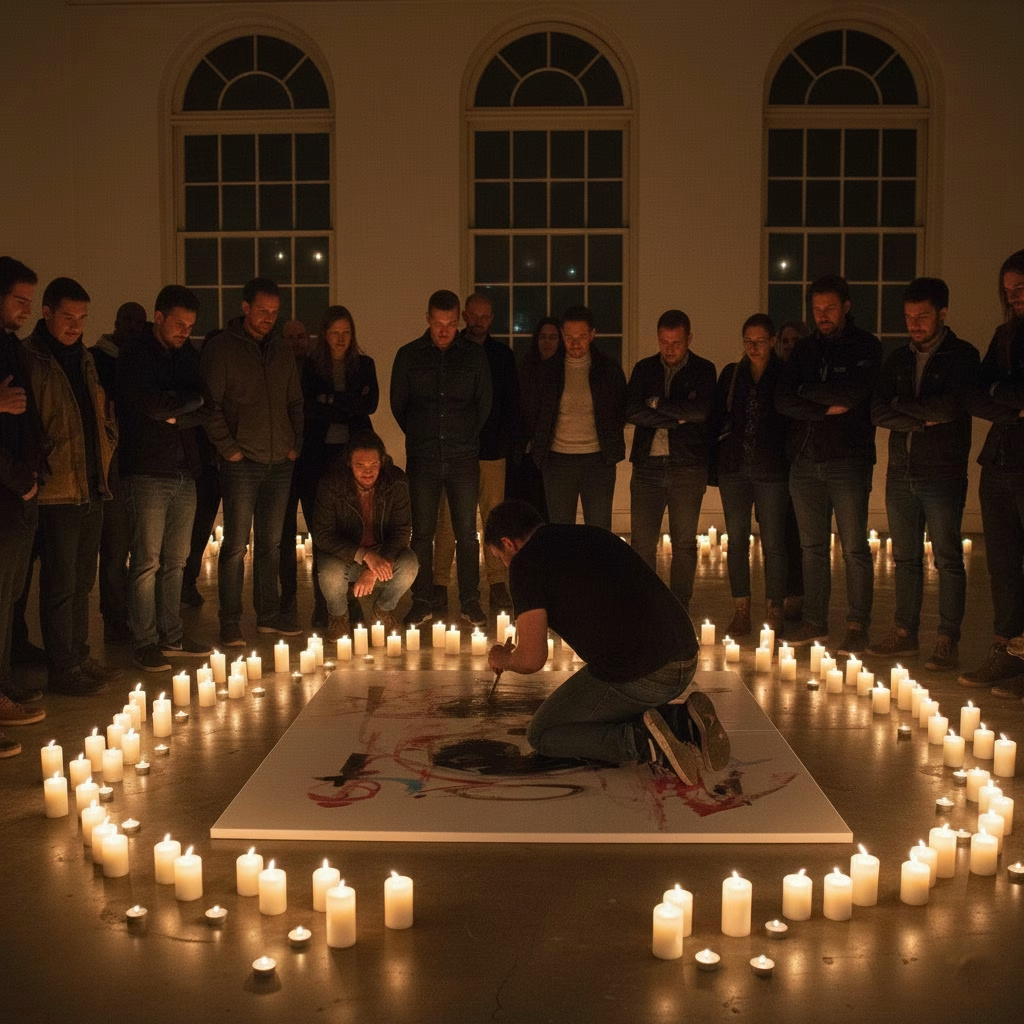
Inspired by ancient shamanic practices, I enter a trance state to transcend the rational mind and let my body be guided: my muscles contract rapidly, my hands move on their own, symbols emerge. It is a dialogue with invisible forces, which takes shape through the body.
The works that are created are not just channelling of energy: they are intuitive answers to a question that haunts me: who are we really, beneath the mask of social identity?
The symbols that my hands spontaneously trace during the creative ritual are the alphabet of that dialogue between energy and matter, between the invisible and the visible.
There is nothing random about them: when read carefully, they reveal messages of freedom that the spiritual world presents to us.
For this reason, the intuitive pictorial gesture is always followed by a rational reading: I interpret the signs, study the sacred geometries and esoteric symbols that emerge in the works, in a quest that follows in the footsteps of artists such as Hilma af Klint and Wassily Kandinsky.
It is in this duality, between mystical ritual and rational interpretation, that identity expands.
It detaches itself from roles, abandons masks, and reconnects with something more authentic.
Spiritual Expressionism lives in the process, in personal transformation.
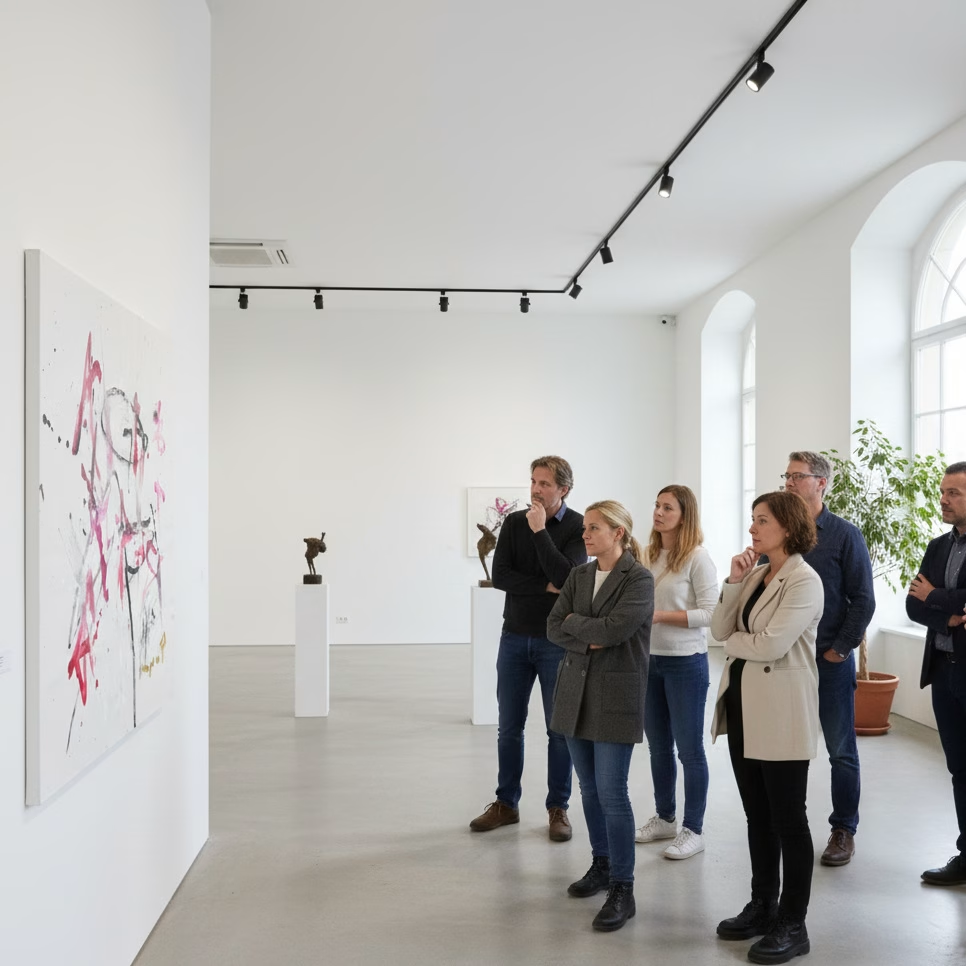
The work of art preserves its residual energy, making it available to those who come into contact with it.
This is why I define my works as Energy Response Art: paintings that do not merely express, but enter into dialogue. With space. With those who observe them.
And with that deep part of ourselves that seeks freedom because it can no longer adapt: our energetic identity.
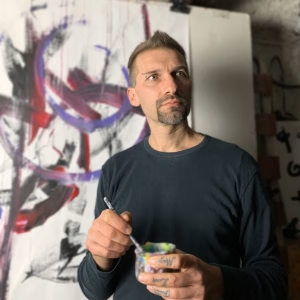
Emanuele “Renton” Fortunati is the founder of Spiritual Expressionism and a pioneer of Energy Resonant Art, a form of artistic research born from direct contact with the invisible world and manifested through raw gesture and spontaneous symbols.
Spiritual Expressionism is the transformative ritual.
Energy Resonant Art is what remains: the work that preserves the energetic residue of that act.
Fortunati’s paintings are created in a trance state. The body moves autonomously, symbols emerge without premeditation. His raw gestures act as a bridge between the energetic world and what can be seen and touched.
What remains on the canvas is a ritual—alive, raw, and necessary.
Only afterward does the mind enter the process—not to create, but to interpret: decoding the symbols and tracing their meaning along a lineage marked by artists such as Hilma af Klint and Wassily Kandinsky.
Yet liberation does not occur in interpretation, but in the gesture itself.
Fortunati does not paint to express himself, but to free himself—from roles, masks, and imposed forms.
His work does not ask to be understood, but to be felt. Each piece enters into a deep dialogue with space, with the viewer, and with that part of each of us still seeking freedom beneath the mask.
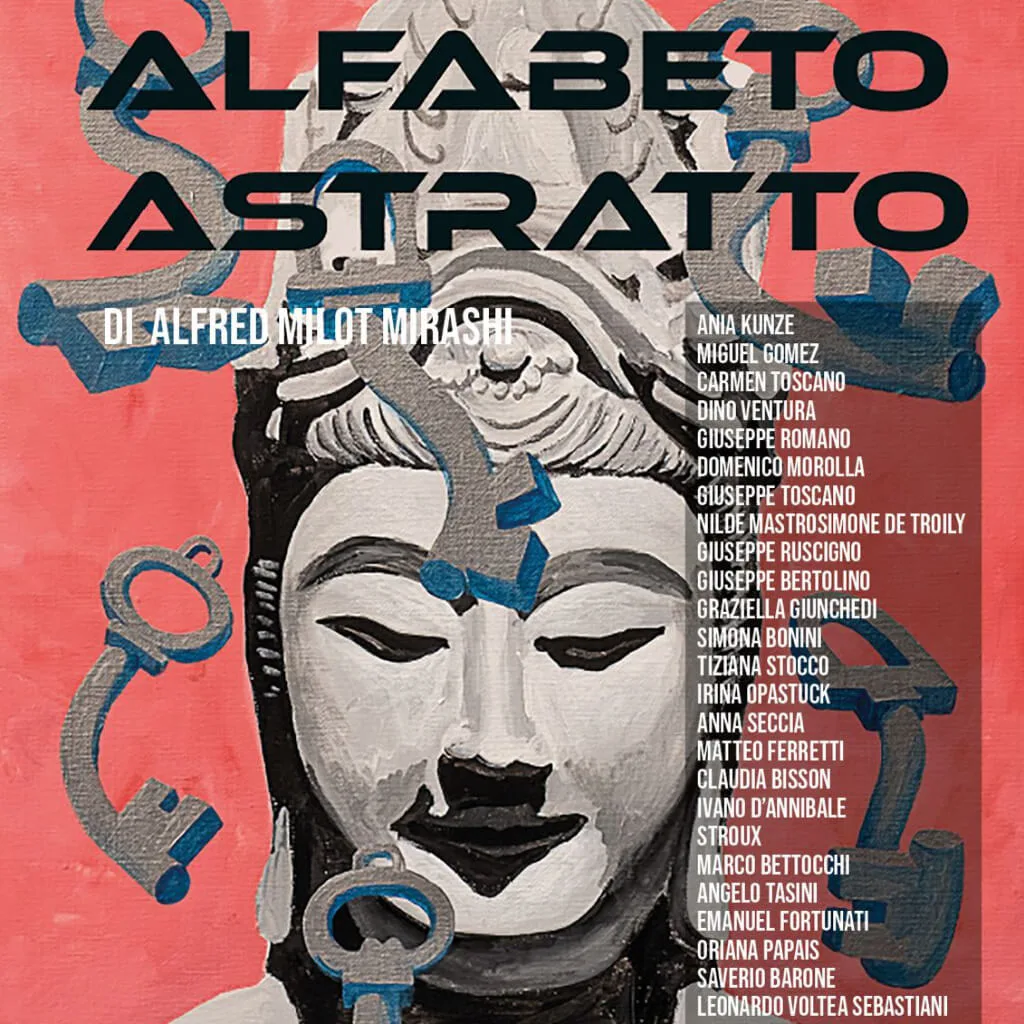
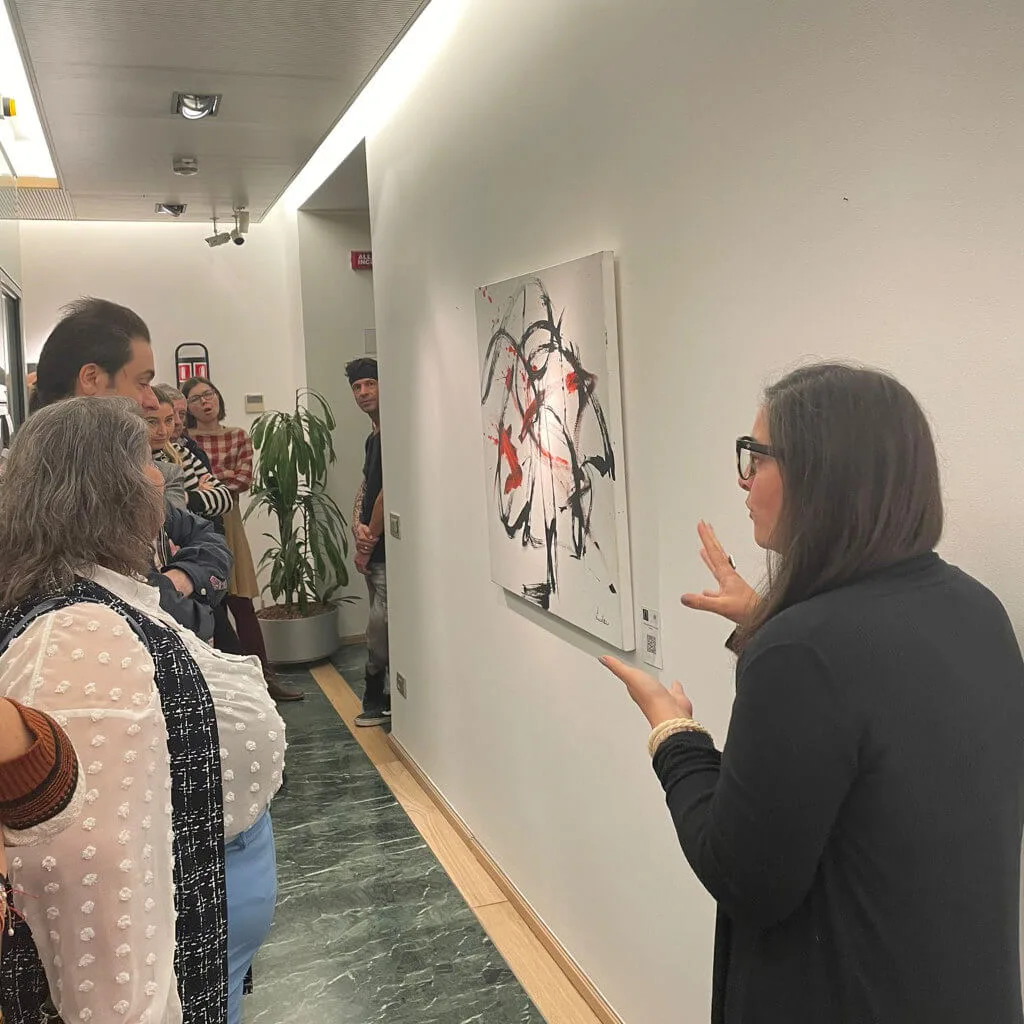
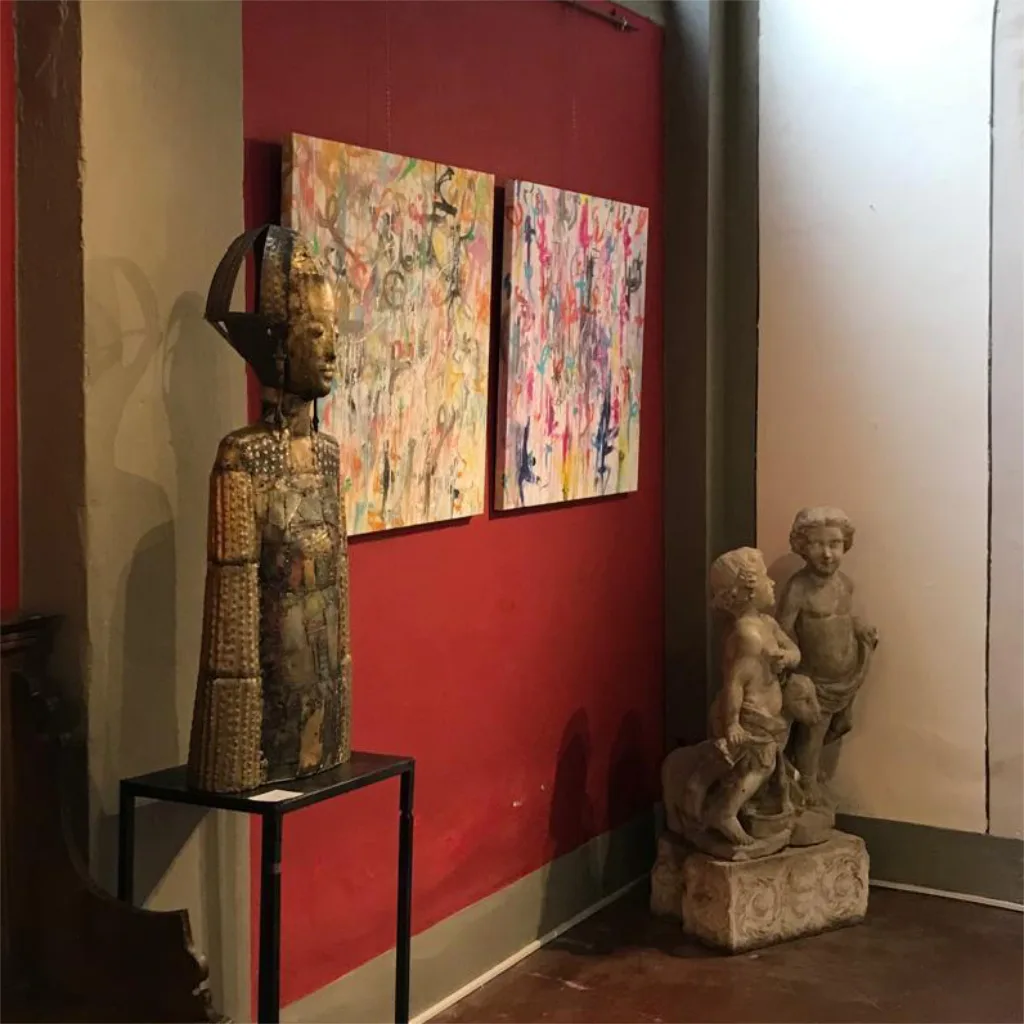
Included in the international catalogue Alfabeto Astratto 2024, Fortunati’s works have been exhibited at Palazzo dell’Emiciclo (L’Aquila), Museo Bellini (Florence), and AAIEE Gallery Center (Rome), alongside internationally recognized artists such as Alfred “Milot” Mirashi, under the artistic direction of Miguel Gomez, curator and artistic director of the Bibart Biennale.
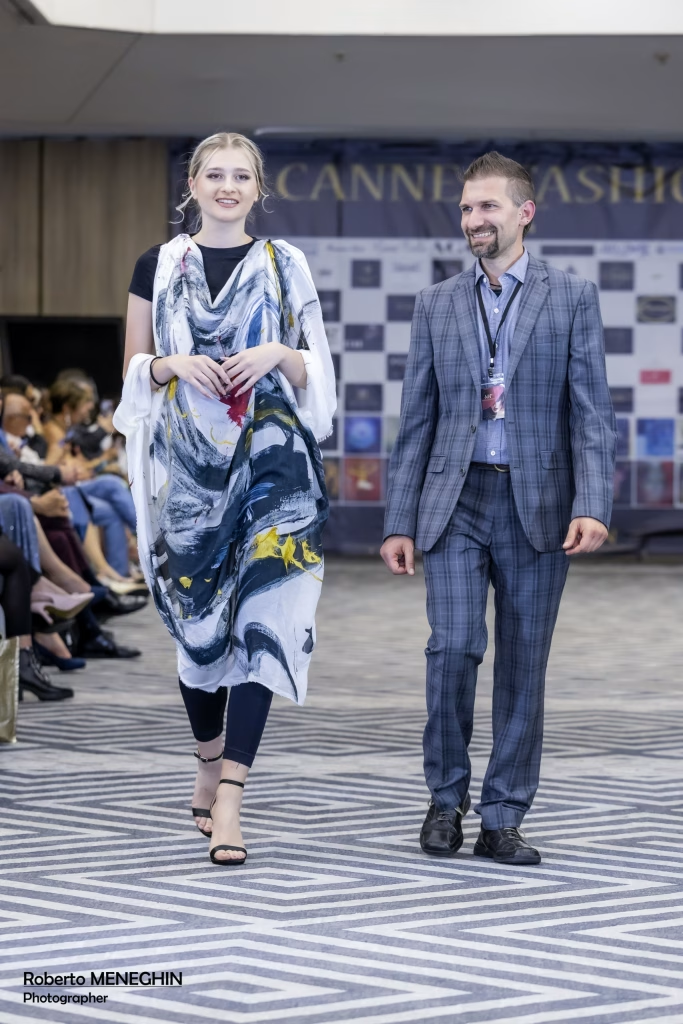
Selected works have also been transformed into artist-designed silk scarves, worn at Milan Fashion Week 2025 and the 2025 Cannes Film Festival.